
Everest Base Camp Trek
Destination
Nepal
Duration
16 Days
Difficulty
Moderate
Max Altitude
5,364 m
Accomodation
Lodge/Tea House
Best Season
Mar-May
Sep-Nov
Trip Start
Kathmandu
Trip End
Kathmandu
Overview of Everest Base Camp Trek
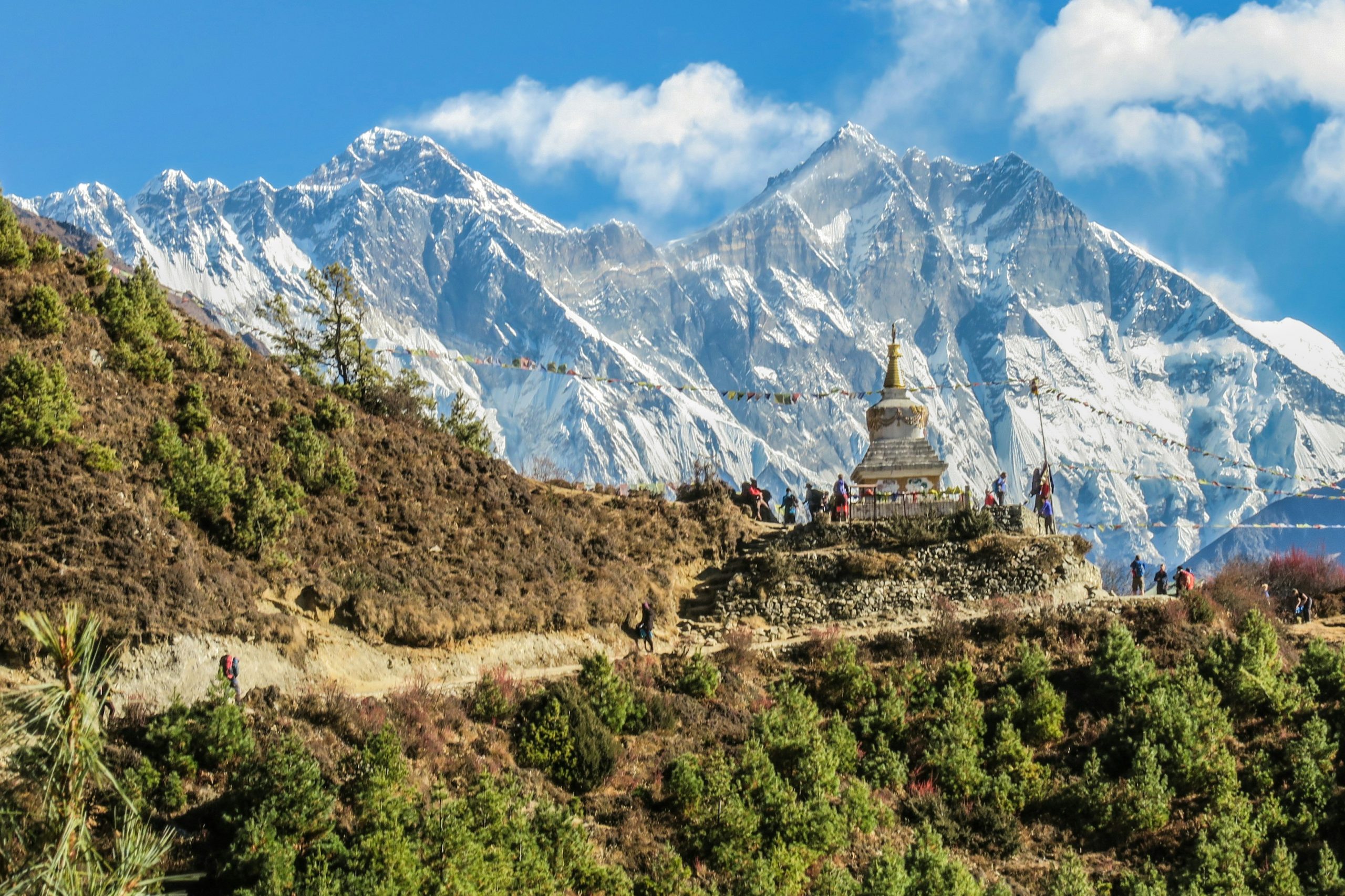
The Everest region is undoubtedly one of the most awe-inspiring places on Earth. Here, four of the world’s six tallest peaks—Mount Everest, Lhotse, Makalu, and Cho Oyu—rise majestically, dominating the rugged Himalayan landscape. The Everest Base Camp trek is often considered the ultimate adventure in the Himalayas. Along the way, you’ll be treated to breathtaking mountain views and get a glimpse into the lives of the legendary Sherpas, renowned climbers of the region. You’ll explore Sagarmatha National Park, a UNESCO World Heritage Site filled with diverse Himalayan flora and fauna, visit some of the world’s highest Buddhist monasteries, and, of course, reach the iconic Everest Base Camp. This journey follows in the footsteps of Sir Edmund Hillary and Tenzing Norgay’s historic 1953 expedition, offering an unforgettable sense of adventure and the unparalleled thrill of standing face-to-face with the mighty Everest.
Our 17-day Everest Base Camp Trek starts with a day in Kathmandu, where you can explore the city’s temples, shrines, bustling markets, and restaurants. The adventure kicks into high gear with a flight to Lukla’s Hillary Airport, offering breathtaking views of the Himalayan range from above. From there, we’ll trek through the stunning Sagarmatha National Park, passing vibrant landscapes, monasteries, and gompas surrounded by towering peaks. A steep ascent takes us to Namche Bazaar, the Sherpa capital, where we spend two days acclimatizing. During this time, you’ll explore the village, learn about Sherpa culture, and visit local monasteries.
As we continue on, the journey unfolds with rocky trails, fresh mountain air, lush pine and fir forests, and the soothing sounds of glacial rivers. Each step brings you closer to Everest, and by the time we reach the famous vantage point of Kala Patthar, you’ll be rewarded with a jaw-dropping 360-degree panorama of the world’s tallest peaks. After achieving the incredible milestone of reaching Everest Base Camp, we descend back to Lukla and fly to Kathmandu, completing an epic adventure you’ll never forget.
Highlights
- Experience the rich cultural heritage of Kathmandu and the
- serene beauty of Pokhara.
- Trek through lush rhododendron forests, crossing suspension bridges over the Modi Khola river.
- Witness the awe-inspiring sunrise panorama from Poon Hill.
- Immerse yourself in the unique cultures of Gurung and Magar villages along the trail.
- Reach the iconic Annapurna Base Camp, surrounded by towering peaks and glaciers.
- Explore the Machapuchare Base Camp and its majestic views.
Itinerary
Day 01: Arrival in Kathmandu (1,400m / 4,593ft) – Transfer to hotel
Upon your arrival at the Kathmandu airport (KTM) you will be greeted by a representative from Beauty Nepal Adventure. After completing custom formalities (Visa, etc) pick up your luggage and look for our representative with a Beauty Nepal Adventure display board at the arrival gate. We will then take you to hotel. After check in, you can either take a rest, hang around in the city, visit our office; it all depends upon your interests. In the evening, we will organize a “Welcome Dinner” at an excellent traditional Nepalese Restaurant where you will enjoy a Nepalese cultural program as well as a fine meal.
Day 02: Katmandu sight seeing overnight Kathmandu
Today, after breakfast, we will start a guided tour to several of the most historical and spiritual attractions in Kathmandu. Some of them listed as World Heritage Sites include the historic Durbar Square, the sacred Hindu temple of Pashupatinath, the famous ‘Monkey Temple’ (Swayambhunath) and the Buddhist shrine (Bouddhanath), which is one of the large Stupas in the world. In the afternoon, there will be a pre-trip discussion where you will meet our trek leader and other team members. You will be briefed about the trek during which you can ask as many questions you may have regarding the upcoming adventure. Included meal: Breakfast (B)
Day 03: Kathmandu – Lukla – Phakding (2,652m/8,700ft)
Today, after breakfast, we will start a guided tour to several of the most historical and spiritual attractions in Kathmandu. Some of them listed as World Heritage Sites include the historic Durbar Square, the sacred Hindu temple of Pashupatinath, the famous ‘Monkey Temple’ (Swayambhunath) and the Buddhist shrine (Bouddhanath), which is one of the large Stupas in the world. In the afternoon, there will be a pre-trip discussion where you will meet our trek leader and other team members. You will be briefed about the trek during which you can ask as many questions you may have regarding the upcoming adventure. Included meal: Breakfast (B)
Day 04: Phakding – Namche Bazaar (3,440m/11,280 ft) 5-6 hrs
Walking through a beautiful pine forest, the track leads us along the Dudh Koshi River through many suspension bridges, one of which is the famous Hillary Suspension Bridge. First, we catch wonderful prospect of the glistening Mt. Thamserku (6618 m). Through the settlement of Benkar, Chumoa, Monjo, we come to the check post and entrance to Sagarmatha National Park. We pass through the last village of Jorsale before reaching Namche Bazaar. The trail climbs through the forests and bridges until we reach the confluence of the Dudh Koshi and Bhote Koshi rivers. After a final steep ascent of about two hours we get first sight fist of at Mt. Everest, peering over the Lhotse-Nuptse ridge. We stop at Chauatra to admire the view. We still need to walk about 1.5 hours to reach Namche Bazaar, a gateway to Mt. Everest and main trading centre of this region. We stay overnight in Namche Bazaar. (B,L,D)
Day 05: Acclimatization day in Namche Bazaar
This is the first of the two days set aside for “acclimatization”. Health experts recommend staying active and moving even during the days meant for rest instead of being idle. We either spend the day taking a hike to Thame or visiting Khunde or relaxing and exploring Namche Bazaar itself. Namche Bazaar is the main centre of the Everest (Khumbu) region and has government offices, ATMs, Internet cafes, shops, restaurants, a bakery and temporary market bursting with colors and people each Friday evening and Saturday. If we move up a few hundred vertical feet during the day, it will help us to properly acclimatize. Our guides will take us to the Tourist Visitor Center near the headquarters of the Sagarmatha National Park where we can observe an assortment of things related to the first Everest ascenders, Sherpa culture and learn about the various plant and animal life in the Everest region. Overnight in Namche Bazaar.(B,L,D)
Day 06: Namche Bazaar to Tengboche (3,857m / 12,654ft)
After breakfast in Namche, we set out towards Tengboche, enjoying superb view of Mt. Everest, Mt. Nuptse, Mt. Lhotse, Mt. Ama Dablam and close up view of Thamserku. Our trek follows more or less smooth trail with few ups and downs which won’t bother you as the magnificent view of the Himalayas keeps your company all through the journey. Along the way, we can spot wildlife musk deer, a herd of Himalayan Thar and multicolored pheasants. The trail goes gradually down up to Kayangjuma. The path eventually reaches Sansa, which is the major trail junction to Gokyo valley and Everest Base Camp. The track then follows through the pine forests and after we cross the prayer flags festooned bridge over the Dudh Koshi River, we reach Phunki Thenga, a small settlement with a couple of teahouses and a small army post amidst the alpine woods. After having a relaxed lunch at Phunki Thenga, we gear up for a slightly tougher climb through the pine forests before we reach Tengboche. Tengboche is a great place for close up views of Mt Ama Dablam, Mt Nuptse, and Mt Everest, and it has the biggest Buddhist Monastery of the Khumbu region. We visit the monastery the same day at around 3 pm to witness the ceremony in the principal and popular monastery of Everest region. Overnight stay at a lodge in Tengboche.5 – 6 hrs
Day 07: Tengboche to Dingboche (4,360 m/14,300ft):5- 6 hrs
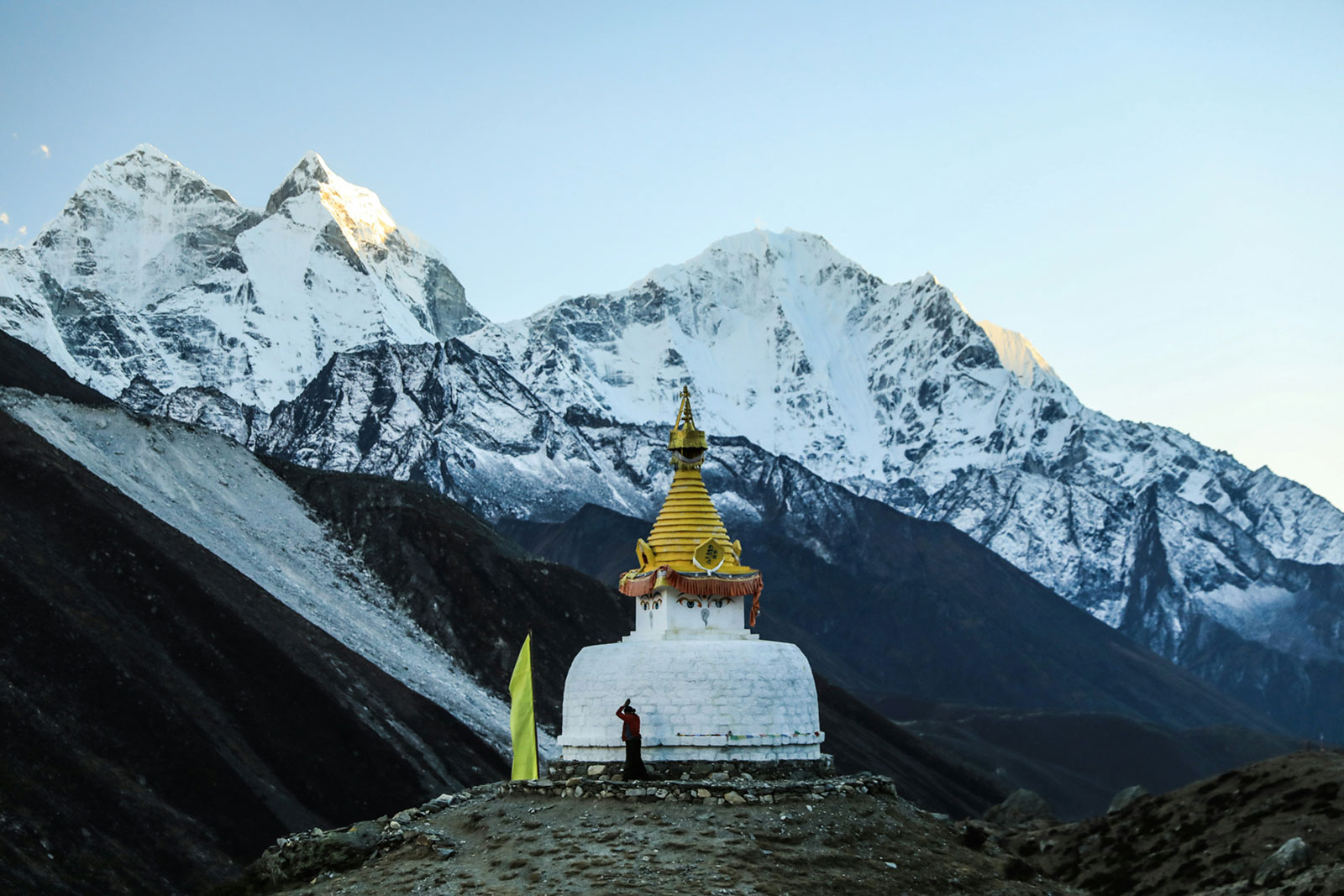
With mountains as its backdrop, the monastery in Tengboche looks more spectacular in the morning. You can take pictures of the monastery and the scenery around and as usual start the day journey. We choose the upper trail for better views on the way to Pangboche village. We pass through several Chortens and Mani walls and small villages. The place where we stop for lunch not only serves delicious food but also allows a fantastic close-up view of Mt Ama Dablam. In the afternoon, walk north to Pheriche or take the eastward trail beneath the towering north face of Mt Ama Dablam. From here onwards, the walk is fairly moderate as we enter the Imja Valley. The valley gradually unfolds as we approach the confluence of the Lobuche River. We descend into the river and begin the last and steepest climb of the day up to Dingboche. On arrival in Dingboche, you will see beautiful array of fields enclosed by stone walls to protect barley, buckwheat and potatoes from the cold winds and grazing animals. Overnight in Dingboche. (B,L,D)
Day 08: Acclimatization day in Dingboche
Rest Day We spend our second day of acclimatization in Dingboche. A refreshing breakfast while admiring a looming Ama Dablam (6856m/ 22493 ft) to the south is really fantastic. To better appreciate Mt Ama Dablam, Mt Lhotse and numerous other peaks visible from Dingboche, we climb the ridge on the north behind the village. This is an ideal acclimatizing excursion. From here you can see three of the world’s six highest peaks, Mt Lhotse, Mt Makalu and Mt Cho Yu. To the west, loom the towering peaks of Cholatse (6440 m/21,126 ft) and Taboche (6542 m/ 21,463 ft). As we look northwest, we see an array of peaks rising at the head of the Khumbu Khola valley. The Lobuche West and Lobuche East peaks are most dominant along with Lhotse which stands over 8500 meters (8501m/27, 890 ft). From a vantage point high on the ridge, you can scan the sweeping Imja Khola valley as well as the picturesque fields and pastures of Dingboche. Overnight in Dingboche. (B,L,D)
Day 09: Dingboche to Lobuche (4,950m / 16,240ft)
We start the day with a climb to Duglha through the Khumbu Khola valley. The walk along the arid terrace is rewarding with awesome views of mountains on all sides. As we come to a yak herder’s place called Dusa, the valley begins to narrow and we continue through Phulung Karpo, the camp site of the first successful Everest Expedition in 1953. Above Phulung Karpo is Chola Lake. As we move on, the majestic view of Mt. Pumori (7138 m/ 23418 ft) comes into view. As the trail descends and curves, Mt. Pumori disappears from view and we come across a roaring stream. After crossing a small wooden bridge, we ascend to Duglha. We can see the tip of Mt Nuptse from here as well as Mt Cholatse, Mt Thamserku, and several other magnificent peaks. Spending a night in Duglha is ideal for acclimatization purposes. Overnight in Duglha. (B,L,D).
Day 10: Lobuche – Gorak Shep (5,170 m/16,961ft) – Everest Base Camp (5,364m/17,594ft) – Gorak Shep:8-9 hrs
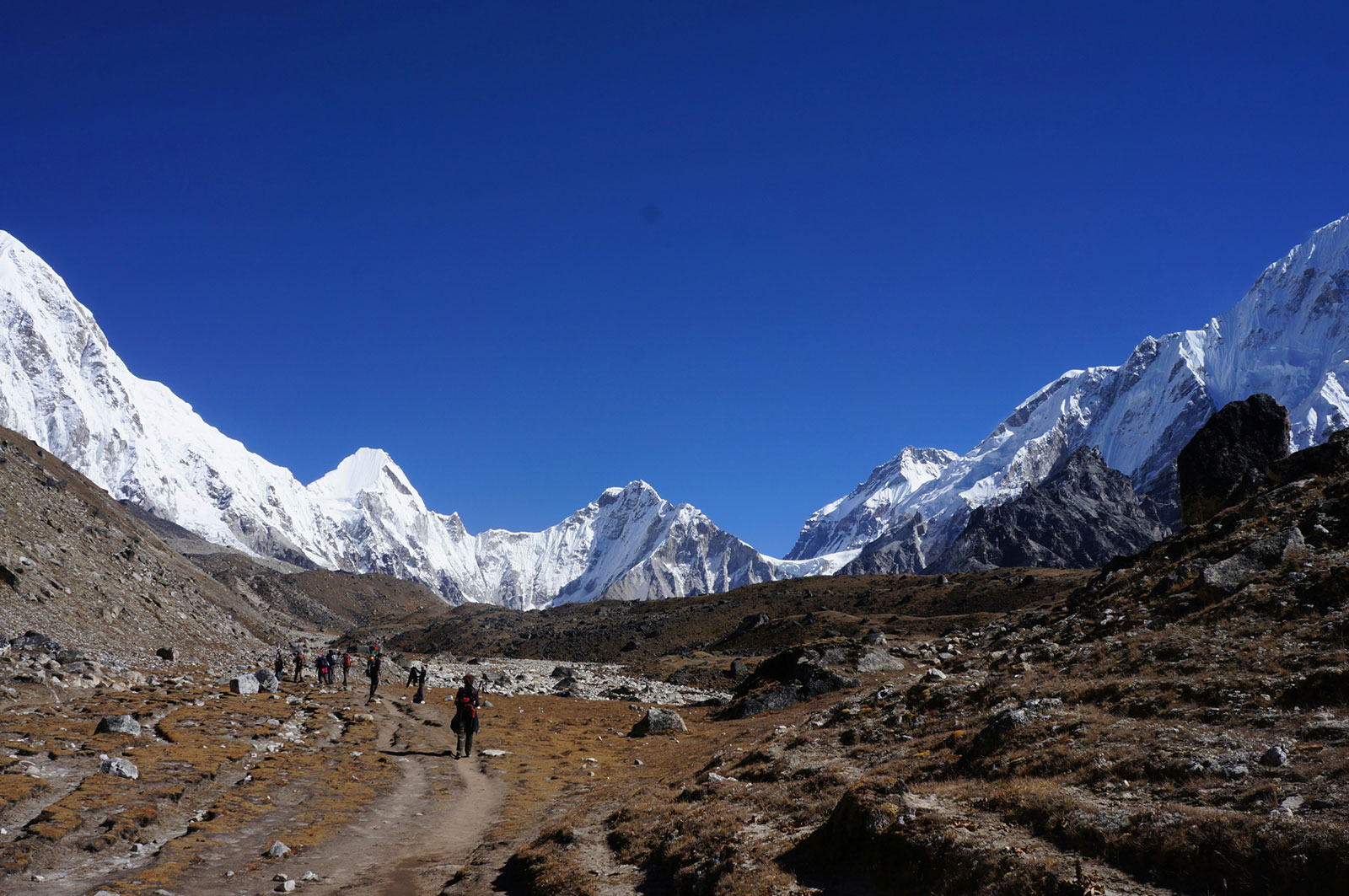
The trail to Gorak Shep goes ahead through the lateral moraine of the Khumbu Glacier. We pass through the pyramid sign post. Ahead on the trail we see crest of north ridge of Everest along with Mt. Pumori, Mt. Mahalangur, Mt. Lingtern, Mt. Khumbutse, Mt. Nuptse, etc. A small ascent would take us to Thangma Riju from where we perceive 360 degree vista of snowy mountains. Climbing steeply up to the top through the torrent of Changri Glacier, we catch our first glimpse of Kala Patthar, a grey-green knoll beneath the Mt. Pumori. As we reach Gorak Shep, we will find snow-capped mountains looming all around us including the top of the world – Mount Everest. After a brief lunch and rest, we take the trail to Everest Base Camp through the once vast Gorak Shep Lake. Continuing straight ahead, we come through the Indian army mountaineers’ memorials. Only upon reaching the Everest Base Camp do we really appreciate the Everest climbers who brave the hazardous route through the Khumbu icefall. Mountaineer’s tents stand out in bright colors against the monotony of gray surroundings (especially in the Spring). Nuptse, Khumbuste and Pumori are the mountains we can view from the base camp. Everest actually is not visible from here. By now we have met the ultimate objective of our trip.
However, the sunset view from Kala Patthar is more admirable than the sunrise view, so it is suggested to visit Kala Patthar today during sunset. As the setting sun’s rays strike the snow capped mountains the resulting scenery is indescribable. For those trekkers who wish to continue to Kala Patthar, our guides and Sherpas coordinate your hike to Kala Patthar for amazing sunset view today rather than waiting until the next day. Overnight in Gorak Shep at a local lodge. (B,L,D).
Day 11: Gorak Shep – Kala Patthar (5545m/18,192ft)- Pheriche (4280 m/14,070 ft):8-9 hrs
Today is the climax of our trip. We start early in the morning to catch the dramatic views from Kala Patthar and witness the first light of day caress the peaks of the mountains, particularly, Mount Everest. However, we need to be prepared for an early morning departure, amid predawn darkness and cold temperature (-10 to -14 C). Plus there is always the potential for chilly winds which are quite common. Familiar peaks such as Lingtren, Khumbutse, Changtse tower to the east even as Everest begins to reveal itself. During the ascent to Kala Patthar, we can pause to catch breath at several outstanding view points from where you can snap great pictures. After several hours of ascent, we reach Kala Patthar. From here we scramble up to the top of a rocky outcrop marked by cairns and prayer flags. Mind-blowing Himalayan panorama unfolds before your eyes as they wander from one mighty massif to another. You can take as many pictures as you want with your camera but don’t forget to imprint the vista in your mind’s eye so that it lasts a lifetime. On being back to Gorak Shep, we have breakfast and wait other participants to return.
Those participants who wish to visit Everest Base Camp today will have early breakfast as the hike to base camp takes longer (4-5 hrs) than the Kala Patthar hike. Upon return to Gorak Shep, the group will have lunch together. We descend in the afternoon and arrive at Pheriche in time for a good night’s rest. (B,L,D).
Day 12: Pheriche to Namche Bazaar (3,440m / 11,286ft)
Just after start of our trek, we cross Khumbu Khola (stream). Following the main Everest trail down the beautifully scenic valley, we pass through the villages of Tsuro Wog, Orsho, Shomare and reach Pangboche at the base of Ama Dablam. We cross the bridge over Imja Khola and pass through the Deboche village and reach Tengboche. We spend a brief time at Tengboche monastery, observe its many prayer wheels. We cannot explore prayer altars inside as the monastery opens only at 3 pm. From Tengboche, a steep descent of about 1500ft/500m leads through rhododendron bushes and fir trees to the Dudh Koshi River. We cross the first bridge over Dudh Koshi on our return trip at Phunki Tenga. Further we pass the village of Tashinga and Sansa before finally reaching beautiful village of Kyangjuma. Here, we appreciate the gorgeous Ama-dablam, Thamserku, Nuptse, Lhotse and Everest! Overnight at Kyangjuma.(B, L,D).
Day 13: Namche Bazaar to Phakding (2,643m / 8,671ft) | 10 km, 4–5 hrs
The trail to Namche Bazar clings to the steep wooded slope beyond Kyangjuma, winding through several bends. We lookout for wildlife such as mountain goats, snow leopards, colourful pheasants etc. while we pass through the forest by the trail. We have enough time in Namche to shop and relax in a bakery that serves coffee and cakes, and provides Internet access. A steep descent from Namche Hill leads to the suspension bridge crossing the Dudh Kosi river near the confluence of the Dhudh Koshi and the Bhote Koshi Rivers. We cross the Dudh Koshi River twice at separate locations before reaching Monjo. We are out of the Sagarmatha National Park after exiting from its official entrance near Monjo and finally reach Monjo Village. Not only is Monjo a quieter place to stay than Namche, it also means our porters have a less strenuous walk back to Lukla tomorrow. Overnight in Monjo.(B,L,D).
Day 15: Fly from Lukla to Ramechhap – Drive to Kathmandu
Today we enjoy the last walk at lower altitude in the Everest region. Most tracks today is flat although we will have some descends and brief ascents too. Today, we enjoy a combo of open plains, rhododendron and pine forests, and in the distant background Kwangde peak. As we walk through the Sherpa villages, we notice impressive display of faith in Buddhism and cultural practices associated with it as prayer stones dot the landscape and prayer flags flap in the wind. We cross the Dhud Koshi River three times through the prayer flags strewn suspension bridges and also cross one of its tributary, Thado Koshi once. The final ascent of about 45 minutes from Chheplung takes us to Lukla, where we stretch our fatigued legs and recall the experiences of the last couple of weeks. With that our fantastic trek culminates on a happy note with everyone back safe and sound with faces that show happiness! This last evening in the mountains is the ideal opportunity to spend some relaxing moments with whole crew as the porters will not accompany you to Kathmandu the next day. Overnight at Lukla. (B,L, D).
Day 17: Final Departure | Farewell Friend
Time to say goodbye to the mountains as journey in Nepal comes to an end today! There is nothing to do but trade emails with travel companions and organize the photos. If you have time, you can still go shopping or sightseeing. Approximately 3 hours before the scheduled flight, a representative from Beauty Nepal Adventure will take you to the airport. On your way home, you’ll have plenty of time to plan your next adventure in the wonderful country of Nepal. (B)
Note :- This Itinerary is meant only as a guideline and is subject to change to suit the local conditions. Walking hours are based on an average walking pace and may change as per individual pace.
What's include
- All airport/hotel transfers.
- Three nights HOTEL IN Kathmandu with breakfast.
- Welcome and farewell dinner.
- Teahouse/Lodge accommodation during trek.
- A full day sightseeing tour in Kathmandu valley including tour guide and entrance fees.
- Kathmandu-Lukla-Kathmandu flight and airport departure taxes.
- An experienced English-speaking trek leader (trekking guide), assistant trek leader (4 trekkers: 1 assistant guide) and Sherpa porters to carry luggage (2 trekkers:1 porter) including their salary, insurance, equipment, flight, food and lodging.
- Down jacket, four seasonal sleeping bag, Beauty Nepal AdventureTrekking duffel bag, t-shirt, and trekking map (down jacket and sleeping bag are to be returned after trip completion).
- All necessary paper work and permits (National park permit, TIMS ).
- A comprehensive medical kit.
- All government and local taxes.
What‘s excluded
- Nepal Visa fee (bring accurate USD cash and two passport photographs).
- International airfare to and from Kathmandu.
- Excess baggage charges.
- Lunch and evening meals in Kathmandu(and also in the case of early return from the mountain than the scheduled itinerary).
- Extra night accommodation in Kathmandu because of early arrival, late departure, and early return from the mountain(due to any reason) than the scheduled itinerary.
- Travel and rescue insurance.
- Personal expenses (phone calls, laundry, bar bills, battery recharge, extra porters, bottle or boiled water, shower etc).
- Tips for guides and porters.
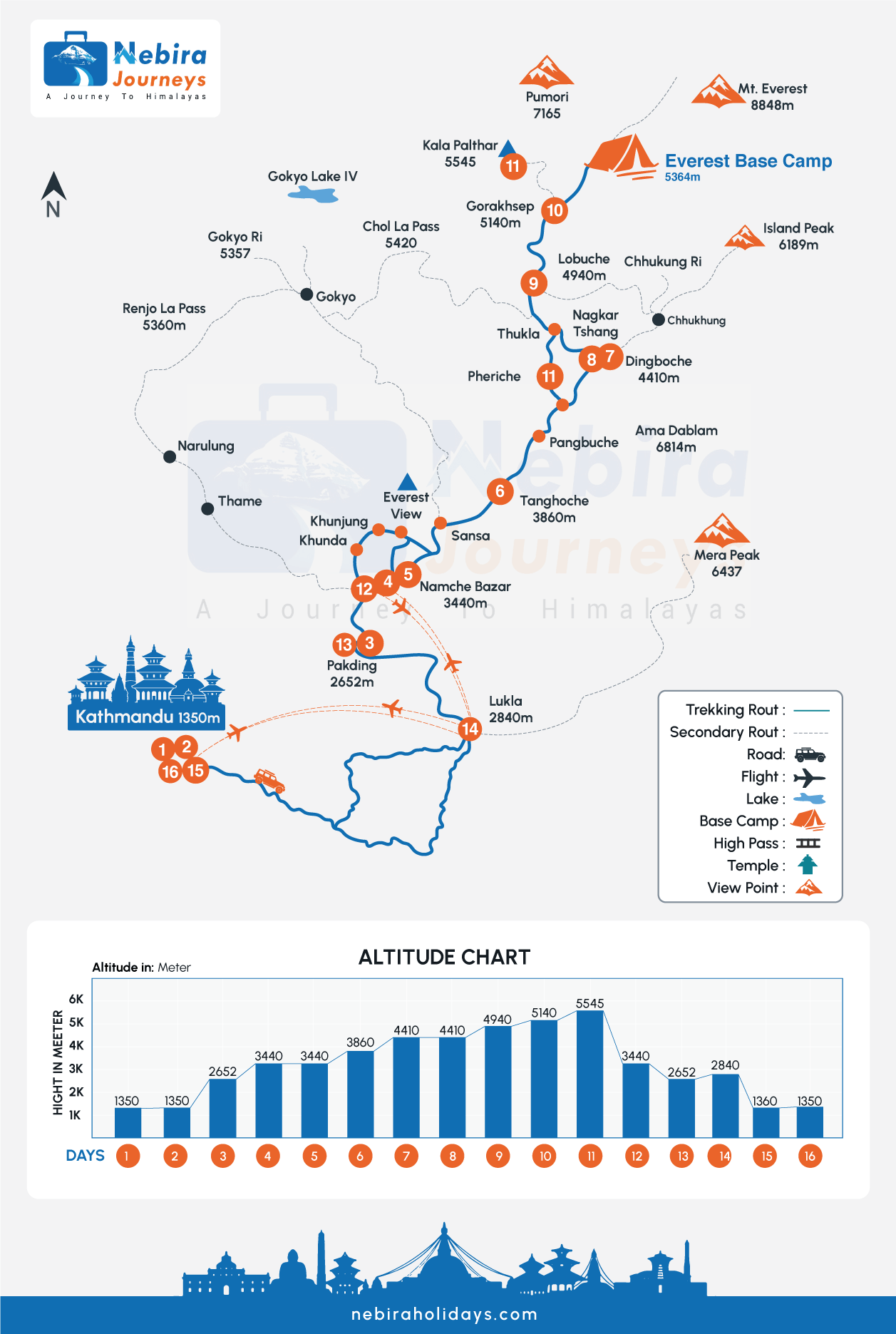
Trek Rout
FAQs about Everest Base Camp Trek
1. How long does the Everest Base Camp Trek take?
The standard Everest Base Camp Trek takes 12–18 days, including acclimatization days in Namche Bazaar and Dingboche. Custom itineraries can be arranged based on fitness and time.
2. What is the best time to do the Everest Trek?
The best seasons are:
Spring (March–May) – Clear views and blooming rhododendrons
Autumn (September–November) – Stable weather and excellent visibility
Winter and monsoon treks are possible but more challenging.
3. How difficult is the Everest Base Camp Trek?
The Everest Trek is moderate to challenging. No technical climbing skills are required, but good physical fitness, stamina, and mental preparation are essential due to high altitude and long walking days.
4. What is the maximum altitude on the Everest Trek?
The highest point of the trek is Kala Patthar (5,545m), which offers the best panoramic view of Mount Everest.
5. Do I need prior trekking experience?
Prior trekking experience is helpful but not mandatory. Regular cardio exercise, hiking practice, and proper acclimatization make the trek achievable for beginners.
6. How do you prevent altitude sickness?
Altitude sickness is managed by:
Gradual ascent and acclimatization days
Drinking plenty of water
Avoiding alcohol and smoking
Walking at a comfortable pace
Following your guide’s instructions
Professional guides are trained to handle altitude-related issues.
7. What permits are required for the Everest Trek?
You need:
Sagarmatha National Park Permit
Khumbu Pasang Lhamu Rural Municipality Permit
Your trekking agency usually arranges all permits.
8. Do I need a guide or porter?
Hiring a licensed guide is highly recommended for safety, navigation, and cultural insight. A porter helps carry luggage, making the trek more comfortable and enjoyable.
9. Is travel insurance mandatory?
Hiring a licensed guide is highly recommended for safety, navigation, and cultural insight. A porter helps carry luggage, making the trek more comfortable and enjoyable.
10. Can I do the Everest Trek by helicopter?
Hiring a licensed guide is highly recommended for safety, navigation, and cultural insight. A porter helps carry luggage, making the trek more comfortable and enjoyable.
11. How cold does it get during the trek?
Hiring a licensed guide is highly recommended for safety, navigation, and cultural insight. A porter helps carry luggage, making the trek more comfortable and enjoyable.
Related Packages


Quick Inquiry
Testmonials
What Our Clients are Saying
Posted on Google
 Nilesh Patel
Trustindex verifies that the original source of the review is Google.
It is good and supportive,but my father they gone to Kailash mansarover he died their due to heart attack I have paid all their dues in rush we came from there and left my father luggage there but they haven’t send the luggage back,they are irresponsible all dues i paid to them,but i call them for my luggage they don’t answer me because i paid them all duesPosted on Google Wooden World (Bhooresh Suthar)Posted on Google
 Sanjaya Adhikari
Trustindex verifies that the original source of the review is Google.
Posted on Google suju chhetriPosted on Google
 सागर लामिछानेHappy Diwali to all.Posted on Google
 dilip thakuri